
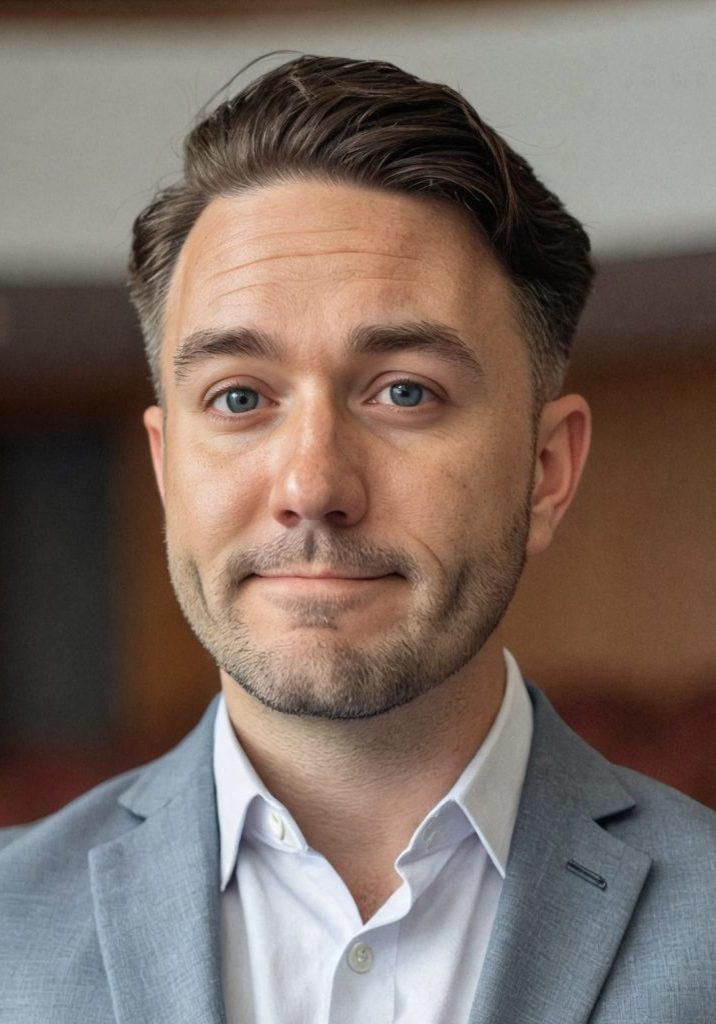
Timothy Jones
AWC Postdoctoral Fellow 2025-2027
Timothy Jones is an America in the World Consortium postdoctoral fellow at Duke University’s Program in American Grand Strategy. He was previously a Defense Fellow at the Naval Postgraduate School. His work seeks to bridge academic inquiry and operational experience to produce scholarship that informs U.S. foreign policy and addresses real-world national security challenges.
His current research examines the evolving role of Special Operations Forces (SOF) in an era of strategic competition, analyzing how SOF can best contribute to deterrence, counter asymmetric threats, and operate effectively in complex, contested environments. Included in this effort is a project that explores Irregular Warfare in the Maritime domain (IW-M), assessing how SOF can disrupt adversary operations, build partner resilience, and secure access in littoral regions. This work offers actionable insights on force design, strategic denial, and the future of irregular warfare at sea.
A second strand of his research explores how intelligence supports special operations in both peacetime competition and crisis environments. Drawing on his professional background, heanalyzes how intelligence can meet the demands of modern special operations, especially within interagency and multinational frameworks. At the Naval Postgraduate School, he designed and taught a graduate seminar on Intelligence Support to Special Operations to mid-career military officers emphasizing real-world applications, emerging technologies, and challenges of integrating intelligence into SOF decision making.
A third line of inquiry addresses the intersection of international aid, counterinsurgency, and peacebuilding. This work highlights how the sequencing and coordination of aid in conflict zones—especially in support of fragile governments—can shape the durability of peace and conflict trajectories. He advocates for adaptable, context-specific strategies that align aid and security objectives to mitigate the risk of exacerbating instability.
As a U.S. Army veteran and former Department of Defense and Department of Navy senior intelligence officer, he brings over a decade of national security experience, including service in special mission units and interagency teams. He provided intelligence support to high-risk operations—ranging from counterterrorism and hostage rescue to counterproliferation and advanced force operations—while operating in and across Iraq, Afghanistan, East Africa, the Arabian Peninsula, and Central Asia. His work in the Special Operations and Intelligence Communities placed him at the intersection of strategy, policy, and operations, and allows him to bring both practical and theoretical insight into his research and instruction.
His research can be found in the International Journal of Cyber Warfare and Terrorism, the Minnesota Journal of International Law, and The Hill. He earned his Ph.D. in Political Science from the University of Michigan, where his dissertation examined rebel targeting behavior in civil wars. He also holds advanced degrees from the University of California San Diego (M.A. International Affairs) and the National Intelligence University (M.S. Strategic Intelligence), along with bachelor’s degrees from American Military University and Indiana University.