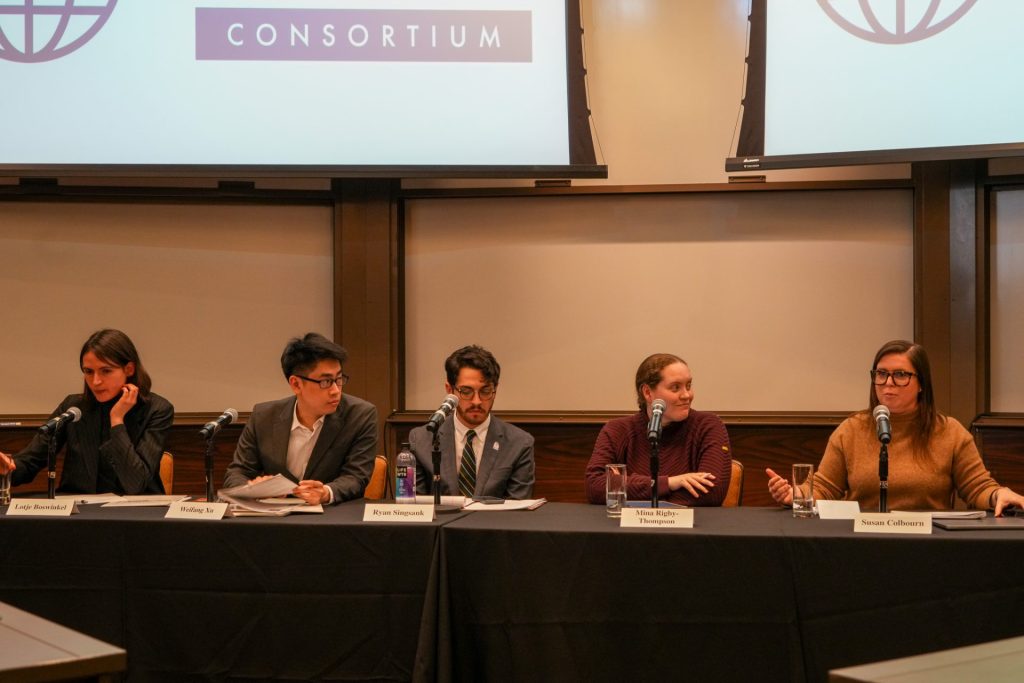

AWC hosted the Young Scholars Conference at UT-Austin from February 19-20, 2025. Titled “Navigating Escalation: America’s Strategic Role in Key Global Regions,” this year’s conference focused on escalation in the Middle East, Europe, and the Indo-Pacific. The aim was to explore the multifaceted dimensions of U.S. engagement in these critical regions, spanning historical origins, modern challenges, and future trajectories. The conference convened doctoral students and early scholars to present on a variety of themes that include:
- Historical Perspectives: Exploring the evolution of American foreign policy and assessing the impact of key historical events and leaders on U.S. decisions in the Middle East, Europe, and the Indo-Pacific.
- Contemporary Challenges and Opportunities: Examining great power competition and evaluating the impact of security threats on U.S. national security strategies, particularly in relation to these regions.
- Alliances and Partnerships: Analyzing the importance of alliances in maintaining global stability and exploring how to strengthen existing alliances and form new collaborations in the Middle East, Europe, and the Indo-Pacific.
- New Domains: Investigating the implications of technological advancement, cyber threats, information warfare, and economic statecraft on U.S. security and policy in these areas.
From these themes, four unique panels were created. The session topics included:
- Understanding Alliances
- Perspectives on the Middle East
- Perspectives on China
- Perspectives on Europe
Our goal with this conference is two-fold: 1) to bring together high-caliber rising academics and aspiring policy professionals to openly discuss America’s role in the world, and 2) to create an annual event which brings together all aspects of our network to interact with outside young scholars who share an interest in American internationalism. In recognition of these goals, we included keynote addresses from faculty and professional affiliates and encouraging our current AWC Fellows to present alongside invited scholars.
Dr. Paul Lettow and Dr. James Goldgeier provided distinguished addresses. We also featured an opening keynote address from Dr. Frank Gavin and a lunchtime keynote from Dr. Rebeccah Heinrichs.